The Ground Beneath Siouxland: A Soil Story Unlike Any Other
If you live in Sioux City, you are sitting on some of the most unusual soil in the country. Much of the region is blanketed by loess, a fine, wind-blown silt deposited thousands of years ago during the last Ice Age. Loess is famously fertile, which is why Siouxland farms are so productive, but it is also notoriously unstable when it gets wet. The particles are tiny and angular, and they bond loosely together. When water infiltrates loess, the bonds weaken, the soil collapses slightly, and anything sitting on top of it, including your foundation, feels the shift.
Beneath the loess, and often mixed into it near river valleys, lies glacial till: a chaotic blend of clay, sand, gravel, and boulders left behind by retreating glaciers. Till behaves very differently from loess. It is dense and often poorly drained, so water tends to perch on top of it rather than soak through. That means the soil around your foundation can be wet and expansive in one layer and saturated but slow-draining in another. This layered geology is the root cause of many Sioux City foundation cracks, and it explains why so many homeowners here deal with wet basements that seem to appear out of nowhere.
Why Loess Soil Causes Basement Leaks and Foundation Settling
Loess has a split personality when it comes to water. In dry conditions it is strong and stable, almost like weak rock. But when it absorbs moisture, it softens and compresses. During a wet spring or after a heavy summer storm, the loess around your foundation can lose volume and settle. As it settles, it pulls away from the foundation wall, creating a gap where water can flow directly against the concrete or block. That is one of the most common Sioux City basement leak causes: not a crack in the wall, but a void in the soil that channels water straight to your foundation.
The same process works in reverse during drought. Loess shrinks as it dries, and the soil pulls away from the foundation even more. Then the next rain sends water rushing into those gaps. This constant wet-dry cycle is what we mean by Iowa soil movement, and it is relentless in Siouxland. Over years, that movement puts uneven pressure on foundation walls, which is why foundation settling shows up as stair-step cracks in block walls, horizontal cracks in poured concrete, and doors that suddenly stick. If you have noticed any of these signs, it is worth getting a professional assessment before the next wet season makes things worse.
Glacial Till and the Water Table: The Hidden Pressure Problem
Glacial till adds another layer of complexity. Because till contains a lot of clay, it does not drain well. Water that soaks into the ground above the till can build up and create hydrostatic pressure against your foundation. Think of it like a saturated sponge pressing against the wall. That pressure finds every weak point: the joint where the wall meets the footing, hairline cracks, and porous block. This is why some loess soil basement leaks appear high on the wall or along the floor line rather than in the middle of a wall. The water is not coming through the concrete itself; it is being pushed through the seams.
In low-lying areas near the Floyd and Missouri river valleys, the water table can rise seasonally and sit close to basement floor level. When that happens, water can wick up through the footing and emerge at the base of the wall. Homeowners in Sergeant Bluff and other nearby communities see this pattern often. The fix is rarely just patching a crack. You need to manage the water before it reaches the foundation, which is where a properly designed drainage and waterproofing system comes in.
Basement Waterproofing Near Me: When to Call a Pro
Not every damp spot means you need a major project, but some signs should prompt a call. If you see efflorescence (the white, chalky powder on block walls), that is evidence that water is moving through the masonry and leaving mineral deposits behind. If your basement smells musty or you have noticed mold growth along the baseboards, moisture is already accumulating. And if you have any crack wider than a hairline, or a wall that is bowing inward, it is time to bring in a professional. Small issues in Siouxland soil tend to grow, not shrink.
A good contractor will start by identifying where the water is actually coming from. Sometimes the solution is Basement Waterproofing from the inside, using a drainage system that captures water at the footing and directs it away. In other cases, the better approach is Exterior Basement Waterproofing, which addresses the soil and drainage on the outside of the wall. Many homes benefit from a combination. The key is a diagnosis based on your specific soil conditions, not a one-size-fits-all sales pitch. If you want a straightforward assessment, you can request a free estimate and get real answers about what is happening under your home.
Solutions That Work With Siouxland Soil, Not Against It
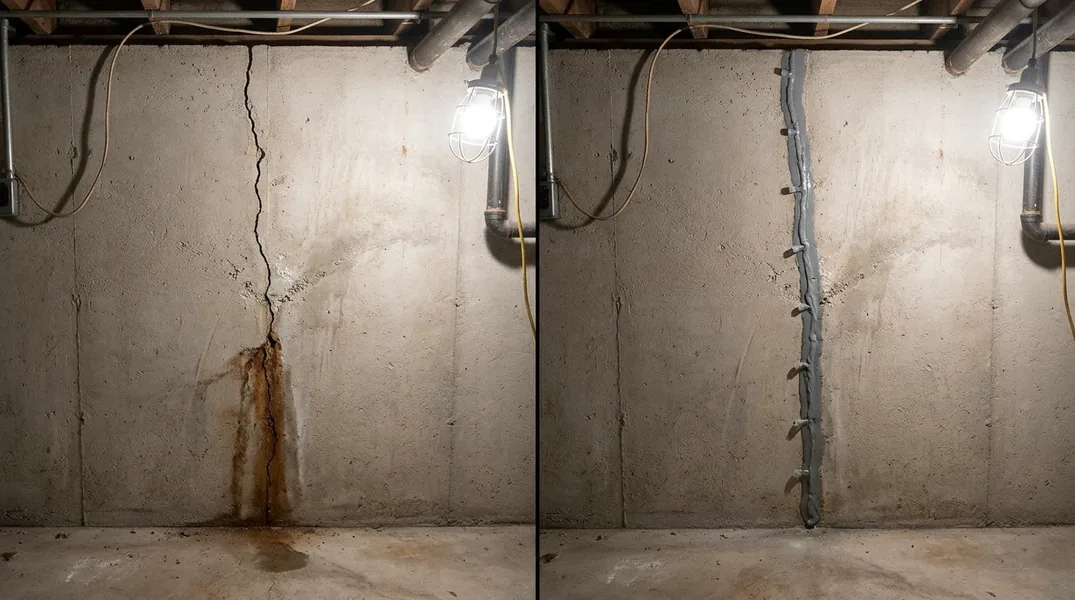
Because the soil here moves and holds water, waterproofing systems need to be designed for movement and pressure. An Interior Drain Tile System is often the most reliable fix for water coming through the floor-wall joint. It collects water beneath the floor and routes it to a sump, relieving hydrostatic pressure before it can push through the wall. For walls that are already cracked or showing signs of settling, Foundation Waterproofing may include crack injection, wall stabilization, and exterior drainage improvements to address the source rather than just the symptom.
Homeowners in Hinton and Salix face the same loess and till conditions, so the principles are the same across the region. The right system depends on the age of the home, the type of foundation, and how the water is entering. What matters most is that the solution accounts for Iowa soil movement and the seasonal water table, not just the visible crack. A local contractor who works in this soil every day will know what to look for and what to avoid.
Basement Waterproofing Cost in Sioux City: What to Budget
Homeowners often ask what waterproofing will cost before they understand the problem, and that is natural. The honest answer is that pricing depends on the cause and the extent of the work. A single crack injection is far less expensive than a full interior drain tile system, and exterior work costs more because it involves excavation. In Siouxland, the severity of soil movement and the depth of the water table can affect the scope, so two homes on the same street may need different solutions. That is why an on-site evaluation is the only way to get an accurate number.
What we can say is that waiting is usually the most expensive option. A small leak that goes unaddressed can lead to foundation damage, mold remediation, and finished basement loss, all of which cost far more than waterproofing done early. If you are budgeting for a project, plan for a thorough inspection first, then ask for a written scope of work with clear line items. A reputable contractor will explain what is included and what is not. To get started, call Sioux City Waterproofing at (712) 717-0033 or reach out online to schedule a free estimate. Protecting your foundation now is the best way to avoid a much bigger bill later.
Looking for a professional basement waterproofing contractor in Sioux City? Sioux City Waterproofing responds fast for all your basement waterproofing needs.
Get a Free QuoteOur services: Basement Waterproofing · Interior Drain Tile System · Exterior Basement Waterproofing