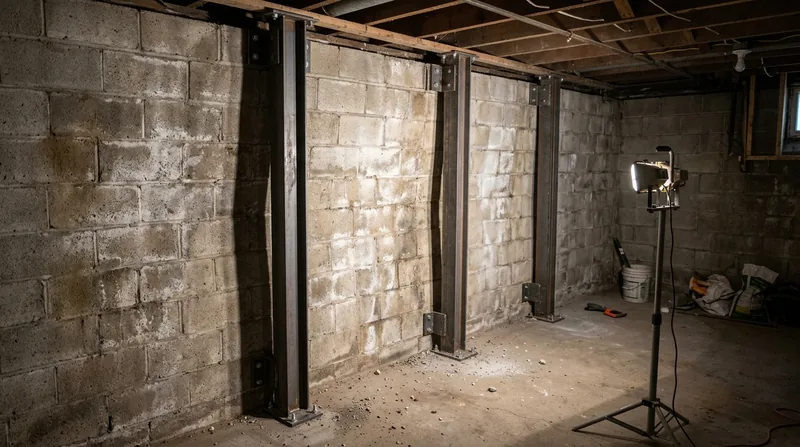




Sioux City sits on a thick blanket of windblown loess over glacial till, and that silt behaves one way in a dry August and another way after a June downpour. On the older brick and block walls in Leeds, Riverside, Morningside and the downtown blocks, the freeze-thaw cycle does the slow damage: water gets behind the wall, freezes, pushes, and the wall starts to lean into the basement. If you are searching for Bowing Wall Repair in Sioux City, the first thing to understand is that a leaning wall is a pressure problem, not a cosmetic one. We assess the movement, the soil load behind it, and the drainage that let the water get there in the first place. Then we match the fix to the severity, from carbon fiber straps on early movement to steel I-beams or wall anchors on walls that have already moved several inches. Call (712) 717-0033 and we will walk the basement with you. You can also read our basement waterproofing page to see how wall repair fits into the bigger water-control picture.
Why Bowing Walls Show Up So Often in Sioux City's Older Neighborhoods
The dominant failure mode here is a block or brick wall pushed inward by wet loess and till pressing from the outside, then opened further by winter freeze-thaw. In the 1900s-1930s Foursquares and bungalows, the basement walls were often laid in stone or soft brick with no waterproof membrane and no proper footing drain. Water runs along the wall, softens the soil, and the wall loses its lateral support. Add the Missouri River bottoms and the creeks draining the bluffs, and you get fast, heavy loading after storms and again at snowmelt.
- Horizontal cracks in the middle third of a block wall usually mean soil pressure, not settlement, and they are the classic bowing signature.
- Vertical cracks at the corners and diagonal stair-step cracks point to footing movement and should be read together with the wall's lean.
- White efflorescence and damp patches on the inside face tell you water is moving through the wall and evaporating there.
- Doors and windows that suddenly stick, or a floor that feels out of level near the wall, are signs the movement is still active.
None of these should be patched and forgotten. A wall that is actively bowing needs to be stabilized before anything cosmetic is done to it.
Key info: In a Riverside brick Foursquare we inspected last spring, the homeowner had painted over a horizontal crack three times. The wall had moved about two inches at mid-height, and the paint was hiding the evidence. That is a strap-and-anchor job, not a sealer job.
For the structural side of the trade, the City of Sioux City's building department is the authority on what permits apply to foundation repair, and the Iowa Division of Labor handles contractor registration questions. Both are worth a look before you hire anyone: City of Sioux City.
How We Stabilize a Bowing Wall in Sioux City, Step by Step
We start by reading the wall, not by selling a system. The question is always the same: how far has it moved, how fast, and what is pushing it. A wall that has moved a quarter inch in ten years gets a different answer than one that moved an inch since last winter. We check the wall with a plumb line and a level, map the cracks, and look at the grading and downspouts on the outside that are feeding the soil. If the water source is not corrected, any repair is temporary.
- We inspect the wall, the footing and the drainage, and document the movement with measurements and photos.
- We relieve the pressure by correcting the water source, which often means extending downspouts and regrading the soil away from the wall.
- We install the chosen system: carbon fiber straps epoxied to the wall face, steel I-beams anchored to the floor and joist, or wall anchors driven into stable soil outside.
- We tighten anchors in stages over weeks so the wall is pulled back gradually, never in one violent pull.
- We seal the remaining cracks and finish the interior so the wall is protected from moisture.
The sequencing matters. Straps and beams hold a wall where it is; anchors can bring it back. Getting that match right is the whole job.
Key info: A 1950s brick ranch in Southern Hills had a rear wall leaning into a partly finished basement. The cause was a downspout dumping at the corner for years. We anchored the wall, extended the downspout eight feet, and regraded the loess so it shed away from the house. The wall has held its position through two winters.
If the inspection shows the wall is sound but the water is the real problem, we will tell you so and point you to foundation crack repair instead of selling you structural work you do not need.
Matching the Repair Method to the Wall
Not every bowing wall needs the same hardware. The table below is the field guide we use when we are standing in your basement, and it is the conversation we will have with you before any work starts.
| Approach | Description | Best for |
|---|---|---|
| Carbon fiber straps | Epoxied to the interior wall face and anchored top and bottom to stop further movement. | Early bowing under about two inches, block walls, tight budgets. |
| Steel I-beams | Vertical beams set against the wall, tied to the floor and the joists above. | Walls with significant lean that need strong lateral restraint. |
| Wall anchors | Plates outside in stable soil, connected through the wall to interior plates, tightened in stages. | Walls that can be pulled back toward plumb over time. |
| Crack injection plus drainage | Epoxy or polyurethane injection for the cracks, with drainage corrected so pressure drops. | Sound walls with seepage but no real movement. |
| Interior perimeter drain | A drain tile system at the footing inside, feeding a sump basin and pump. | Walls under hydrostatic pressure that keep getting wet. |
Bowing Wall Repair Cost in Sioux City: What to Expect
Nobody can give you a real number over the phone, and anyone who does is guessing. The honest starting point for structural wall work is From $600, which covers the assessment, the crack mapping and the smaller stabilization jobs. From there, the price moves with the length of wall involved, the number of straps or beams, whether anchors are needed, and how much excavation the anchor installation requires. A single-wall strap job on a Morningside bungalow is not the same as pulling back a long block wall on a 1920s downtown building.
Access matters too. A basement packed with storage, a finished ceiling, or a wall behind mechanical equipment slows the work and adds labor. Soil conditions matter in Sioux City because loess and glacial till behave differently when wet, and that affects how deep anchors have to go. Get two or three estimates, ask each contractor to explain the method they recommend and why, and be suspicious of anyone who quotes a structural repair without measuring the wall. Our pricing page lays out the ranges in more detail.
Bowing Wall Repair Near Me: How to Vet a Contractor Near Sioux City
Structural work on a basement wall is not a place to hire the lowest bid from a stranger with a truck. Ask for proof of licensing and insurance before anyone touches your wall, and confirm that the policy covers structural work, not just general labor. Ask for references from jobs in Sioux City or Sergeant Bluff that are at least two winters old, because a repair that has been through two freeze-thaw cycles has proven something. And ask who pulls the permit, because structural foundation repair commonly requires one and the rules vary by jurisdiction. The local building department has the final word on that.
If you are comparing contractors, get the scope in writing: which wall, how many straps or anchors, what drainage correction is included, and what happens if the wall moves again. A transferable warranty on the work is reasonable to expect; a promise of a lifetime guarantee is not. Call us at (712) 717-0033 or use the contact page to set up a free inspection. We will tell you plainly whether you need structural stabilization or just better water control.
Bowing Wall Repair in Sioux City: Pricing Guide
| Service | Price | Details |
|---|---|---|
| Wall assessment and crack mapping | From $600 | Includes plumb-line measurement, crack mapping, drainage review and written recommendation. |
| Carbon fiber strap installation | Starting at $1,200 | Per wall section, includes epoxy anchoring and crack sealing, priced by number of straps. |
| Steel I-beam reinforcement | On estimate | Priced by wall length and beam count, tied to floor and joists above. |
| Wall anchor system | On estimate | Requires exterior excavation, priced by anchor count and soil conditions. |
| Travel | Included | In Sioux City and surrounding areas, no separate call-out or mileage fee. |
| Estimate | Free | Response within 24h at (712) 717-0033, no obligation to book. |
Indicative pricing, the exact cost depends on square footage, finish, and site access. Free personalized estimate within 24h at (712) 717-0033.


